1. Concept & Gearing Kinematics
The **Scotch-Yoke** is a classic reciprocating motion mechanism, converting rotary motion into linear sinusoidal motion, or vice versa. The piston or other reciprocating part is directly coupled to a sliding yoke with a slot that engages a pin on the rotating crank. The primary advantage of the Scotch Yoke over standard slider-crank linkages is that it produces pure simple harmonic motion (cosine speed profiles), minimizing high-frequency vibrations in reciprocating systems (such as high-pressure gas compressors).
This project focuses on the conceptual design, tolerance analysis, and additive manufacturing (3D printing) of a working benchtop Scotch-yoke model.
2. SolidWorks CAD Assembly & Clearances
The assembly was modeled in SolidWorks. It consists of:
- Rotating Crank Disk: Fitted with an offset driving pin to slide inside the yoke channel.
- Sliding Yoke Frame: Designed with a precise guide slot. High dimensional tolerances (0.2 mm air gaps) were designed to prevent binding during manual rotation.
- Linear Guide Rods: Double-bearing slots to constrain yoke movement along a single axis.
- Base Plate Support: Integral structure housing the crankshaft bearing journals.
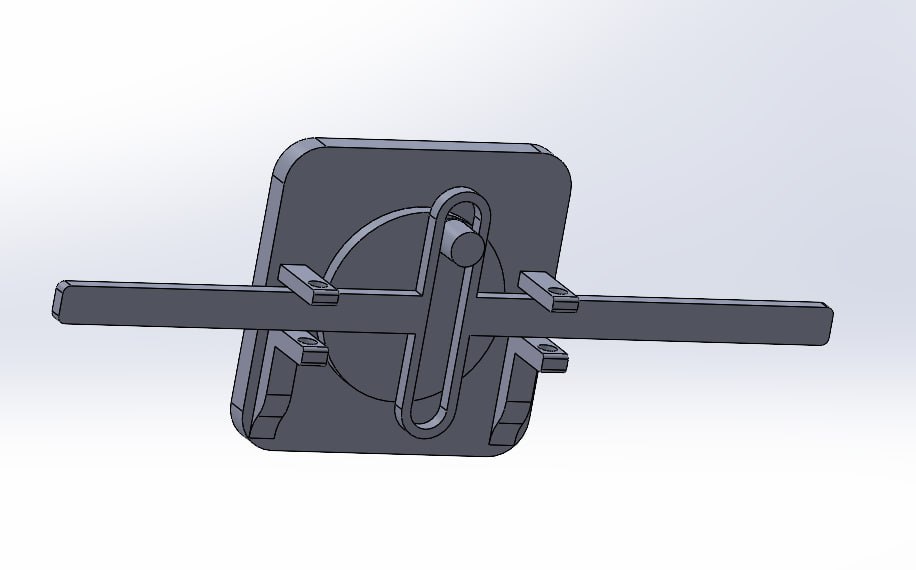 Front view rendering
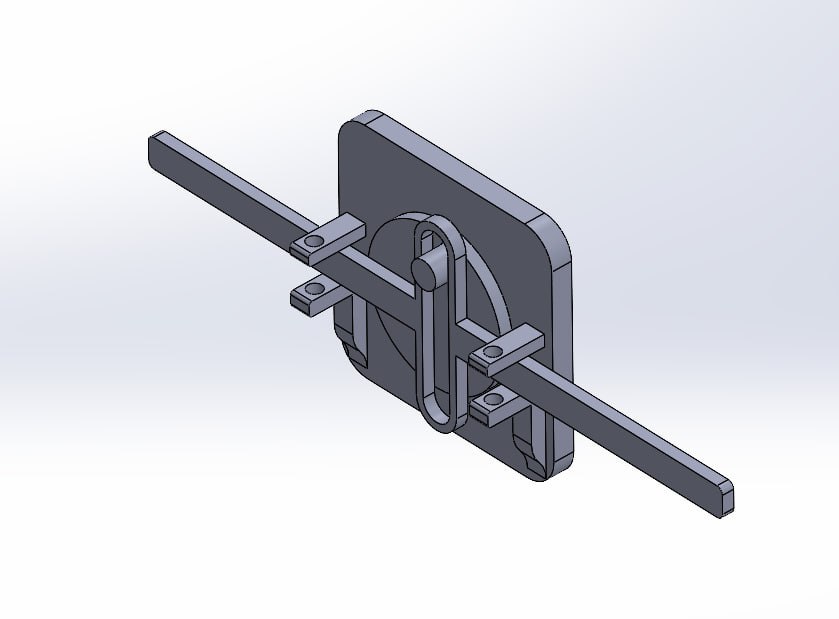 Isometric view
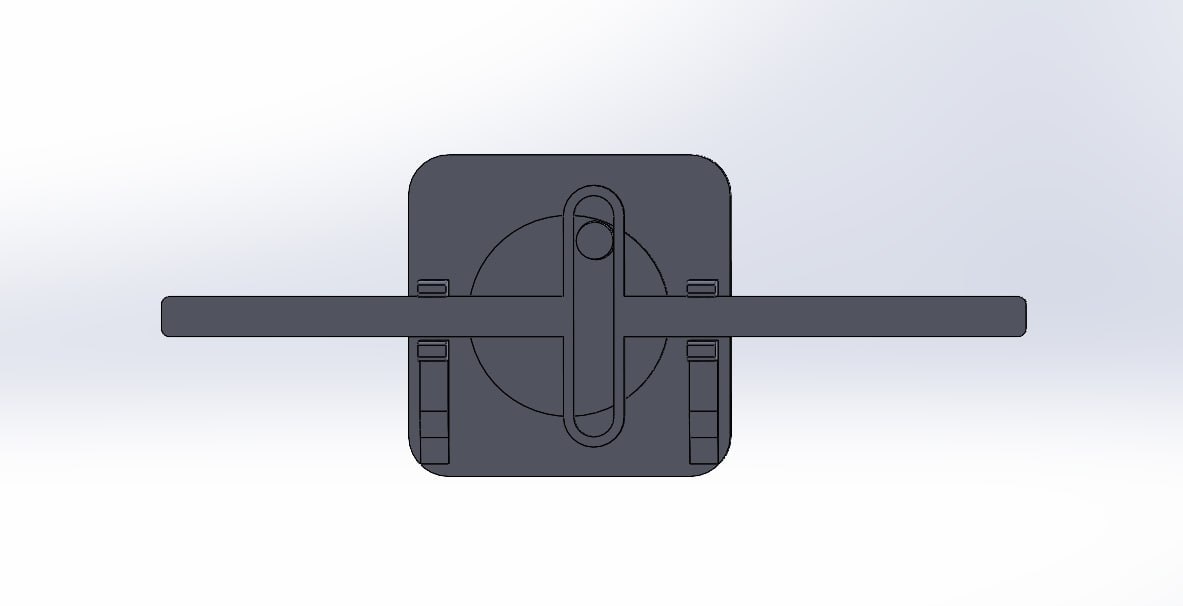 Yoke-slot close up
3. 3D Printing & Tolerance Verification
Individual parts were exported as STL files and sliced for FDM 3D printing. PLA (Polylactic Acid) was chosen for its dimensional stability and low shrinkage rates.
- Infill Density: 20% grid pattern for structural members, 40% infill for high-stress crankshaft and offset pins.
- Layer Height: 0.2 mm resolution to guarantee smooth contact surface interface inside the yoke guide slot.
- Assembly Tuning: Post-print sanding was performed on mating components to remove print seams, and silicone-based dry lubrication was applied to reduce friction during rotation.
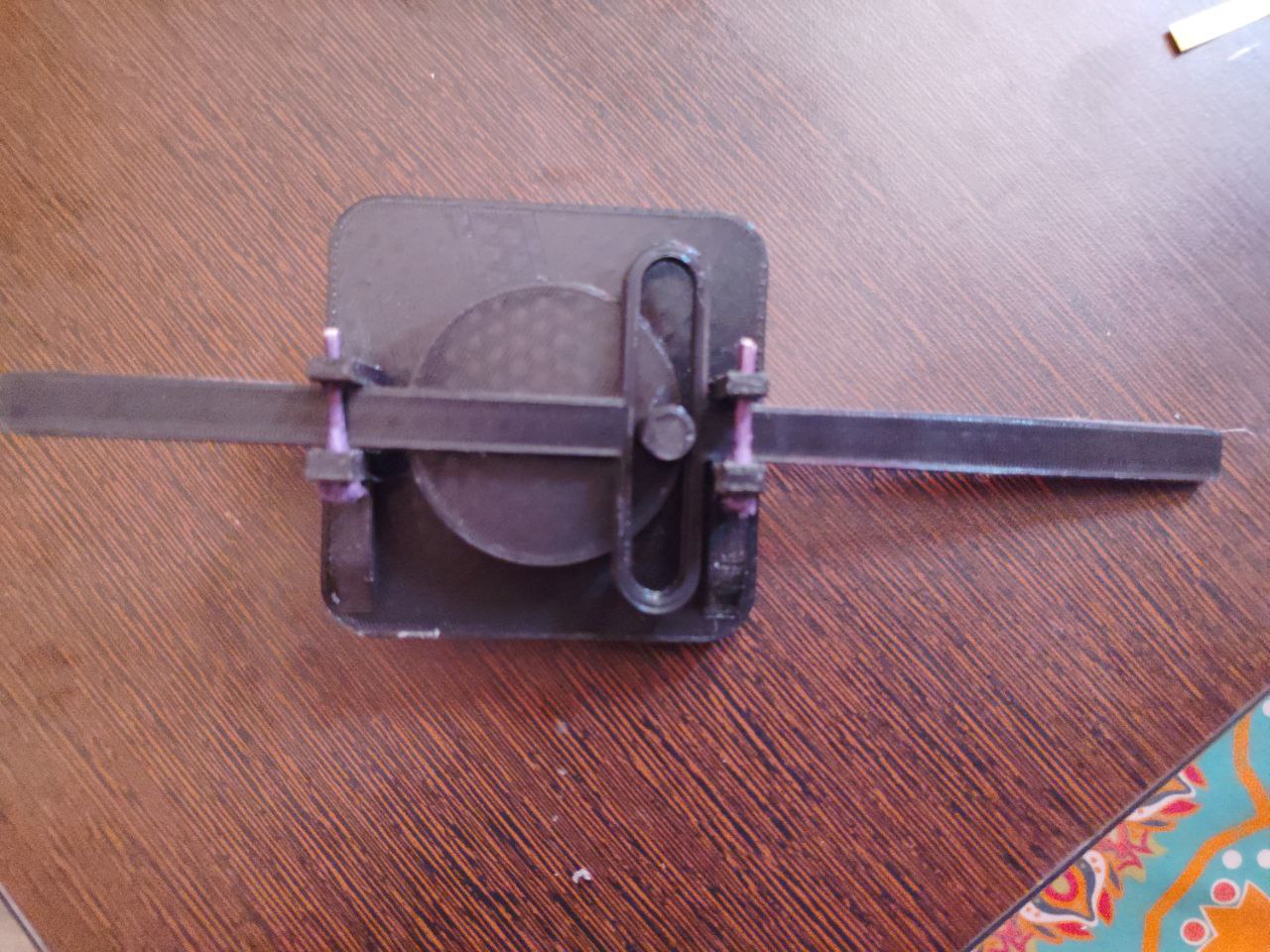 Figure 4: Completed, fully assembled 3D printed PLA working model of the Scotch-Yoke mechanism
Kinematic Insight Summary
Building and fabricating this working model confirms how rapid prototyping tools allow mechanical designers to verify mathematical clearance tolerances and study mechanical linkage kinematics physically within hours.